


Fifteen years ago, when I released Think Outside the Box Office, my mission was to help independent filmmakers take back control of their films and rethink the distribution landscape. That mission hasn’t changed — but the terrain sure has.
Film is unique in the arts in that on the one hand it is intensely creative and on the other it is a business (at least for most filmmakers). But for many, it is an arcane, confusing business with a wide range of rights to administer that are often defined differently in different agreements.
Let’s face it—distribution is often the most overwhelming part of filmmaking, especially for indie filmmakers who don’t have the resources of major studios who have entire departments handling rights across areas like theatrical, non-theatrical, TVOD, AVOD, etc. Many/Most/95%+ of filmmakers are left to juggle all these responsibilities themselves.
In the book, I wanted to help filmmakers conceptualize a holistic approach that would engage all rights streams but do it in a way that they and a small team could handle.
From Think Outside the Box Office (TOTBO):
“I am going to take a bold step and reclassify the rights that filmmakers control for the exploitation of their films into three basic categories: live event/theatrical, merchandise, and digital.”
Over the years, I’ve expanded that to four. In this post, we’ll explore a fresh framework for thinking about your film’s rights — categorized into Event/Theatrical, Digital, Educational, and Merchandise — and how this lens can help you maximize your goals in today’s complex distribution ecosystem.
Instead of thinking about rights in legal jargon or outdated sales categories, imagine mapping your release strategy around how your audience actually engages with your film.
Event / Theatrical

From TOTBO: Event/Theatrical “includes all types of theatrical, non-theatrical, alternative theatrical, and grassroots screenings, as long as they are with an audience and the film is shown as the filmmaker intended (usually from beginning to end, in the dark).”
The consumer experience for event/theatrical: a live, communal experience unavailable anywhere else. A theater, festival, conference, community center or unconventional space like a park or a kombucha brewery (yes, that actually happened) — that brings people together to engage with the film.
If the consumer experience is about community and unique experiences – then you as a filmmaker should lean into those qualities considering creating time scarcity and events unavailable in any other way: live Q&As, panels, music, food, performance, stunts — your imagination is your only limit.
Event-based screenings offer filmmakers a chance to connect with their audience in a deeper, more personal way. From festivals to grassroots screenings, each screening can be a powerful tool for awareness, community impact, and career growth. Whether aiming for broad exposure or targeting a niche community, the goal is to make the screening feel special and urgent, creating an experience that cannot be replicated.
Some examples from recent case studies:
- Hundreds of Beavers took a niche theatrical approach, starting in the Great Lakes region with a touring beaver wrestling match creating sold out screenings before expanding nationally and grossing over $650K at the US box office.
- Eno is eventized by nature – with the goal that each screening of the film being a unique generative edit of the film. In addition, the film utilized a range of event/theatrical releases including special events in both traditional and non traditional venues before moving onto a “traditional” theatrical release and including exclusive “Art House Days” events.
By rethinking the theatrical release, filmmakers can transform screenings into impactful, community-driven events that maximize reach, revenue, and lasting engagement.
Digital
15 years ago, when there still was a variety of sustainable broadcasters and cable channels, I declared in the book (yes this was in all caps): “TELEVISION AND CABLE ARE DIGITAL RIGHTS. DIGITAL RIGHTS ARE SLOWLY INVADING THE REALM OF CONVENTIONAL TELEVISION AND CABLE. A “television” is just one viewing platform for digital rights. Cable is just one delivery system for digital rights. Many free streaming channels are building themselves as television channels for the future.” The invasion completed 5-10 years ago now.
I defined digital rights then as content“delivered electronically, for viewing on a private screening device, whether it’s a telephone or home theater. No physical product is purchased, no audience (outside of family and friends) is present, and often the viewing experience is broken up by time.”
I include in this – all forms of VOD and FAST (including social media), broadcast, cable, airline/cruise ship/hotel.
The consumer experience is convenience; allowing audiences to engage with the film anywhere, anytime on a device of their choosing. Hence if this experience is driven by convenience, then you should consider making it as convenient everywhere at the same time.
But I think the key word here is “consider”. I do feel that windowing still applies to digital rights but the consumer experience above (desire for immediacy and access) needs to be considered when you are planning your release.
There are different platforms and models for distributing digital content, each with its own revenue model and audience expectations:
- TVOD (Transactional Video on Demand): Platforms like iTunes, Amazon, and Google Play allow viewers to rent or buy your film individually.
- SVOD (Subscription Video on Demand): Platforms like Netflix, Criterion, and Hulu pay a flat fee to stream your film to subscribers.
- AVOD / FAST (Ad-Supported / Free Ad-Supported Streaming TV): Platforms like Tubi, Pluto, and Roku monetize your film through ad impressions, similar to traditional television.
- FVOD, MVOD, EVOD – respectively Free and Member (which you will see in PBS contracts) and Educational VOD – see below.
- Broadcast/Satellite/Cable: Networks like PBS or international channels can bring credibility and far-reaching exposure but often require special formatting or hour-long versions.
The key to success here is timing these rights in relationship to the rest of your release and understanding how your audience consumes media.
Real-world examples include:
- Sam Now: Coordinated a day-and-date TVOD release alongside a broadcast on Independent Lens, followed three months later by a second window SVOD.
- Hundreds of Beavers: Sold TVOD rights to FilmHub, earning over $200K, while also pre-selling SVOD and AVOD rights to Fandor.
By embracing the digital landscape and choosing the right distribution methods, filmmakers can maximize reach and revenue while maintaining control over their content.

Educational
Educational rights can be a critical source of both revenue and mission-driven outreach. From a consumer experience standpoint, this path focuses on providing lasting, value-driven access to audiences in schools, universities, libraries, and community organizations.
These institutions seek films for academic or institutional use, creating opportunities for filmmakers to engage with specific, often long-tail, audiences. Educational distribution allows for sustained impact, ensuring your film remains a relevant resource long after the public release window closes.
Traditionally, educational rights are a hybrid of three different rights and as such involve consideration in relation to those different rights: First, PPR/public performance rights (in non-theatrical settings) which is a version of event/theatrical. Second, purchases of titles for a library which include the various forms of DSL/digital site licenses or EVOD (Educational Video on Demand) or the purchase of DVDs/BluRays for public and educational libraries. You can sell these rights PPR and DSL/DVDs separately or in tandem. This space blends the broad reach of digital with the engagement of event screenings, offering an ongoing opportunity to generate revenue while also delivering educational value. Hence, it also is a blend of consumer experiences – unique events in institutional settings and the ability to have immediate or seeming immediate access. A well-targeted educational release can run for years, creating continuous licensing income.
To break into this space, filmmakers can partner with specialized distributors or take a more direct approach by reaching out to professors and libraries directly – or a hybrid approach contracting to do some aspects yourself, while handing some of it over to an educational distributor.
To get even more granular, you can also handle educational institutions and public libraries separately. If your film aligns with a timely issue — such as climate justice, racial equity, or reproductive rights — it can become a go-to resource for themed events like Earth Day or Black History Month, further extending its reach and relevance.
Note that while documentaries are traditionally strongest in the educational sphere, Kanopy will license documentaries and narrative films – hence those can be valuable rights for fiction films as well and you should be aware of when those occur in your windowing and if you are working with a distributor, how and when will they exercise those rights.
Example:
- Sam Now partnered with Good Docs, an educational distributor, to launch their educational window shortly after the theatrical and VOD release, ensuring the film continued to find audiences in academic and advocacy spaces.
- My Love Affair With Marriage is a fiction film but it deals with a variety of issues including domestic violence and that educational/library release went through their digital distributor.
Merchandise

Merch isn’t for all films – but it can be a great way to engage audiences and earn revenue for certain films – and it can be fun! (fun is important – especially in these dark times).
Consumer Experience: Object – Identity eg.: I want that object because it speaks to me, has some intrinsic value, expresses something about me. If this experience is driven by a desire for objects, then you should make sure to make objects that your audience wants. I realized this when making t-shirts for my film Bomb It. I made a lot of t-shirts with distressed fabric that I liked – but the audience for the film preferred the heavy Hanes Beefy T variety (I still have a box of the former in my closet – none left of the latter).
If your film inspires people to express themselves or represents a part of their lifestyle, merchandise becomes an exciting way to deepen that connection.
Many people love to surround themselves with objects that represent their passions. Whether it’s something they can wear, display, or use, these items hold value because they express something about the person and the experience they’ve had. Merchandise allows audiences to:
- Represent an experience: Your film becomes more than just a movie; it’s a moment in time they want to relive.
- Represent a lifestyle: Merchandise reflects the lifestyle or values your film represents—whether that’s a subculture or an aesthetic.
- Gift: Fans love to share the experience, and merch makes a perfect gift to introduce others to the world you’ve created.
- Share: Merchandise becomes a conversation starter, a way to connect with fellow fans and spread the word about your film.
At its best, merch is not just about selling products; it’s about building a community around your brand and giving your audience a way to wear, share, and support the world you’ve created.
Merch doesn’t have to be expensive. Even a small, thoughtfully designed store with limited items can generate a meaningful stream of revenue—especially when paired with your screenings, social media campaigns, or email list incentives. It’s an opportunity for long-term engagement and a chance for your fans to show their support.
Examples:
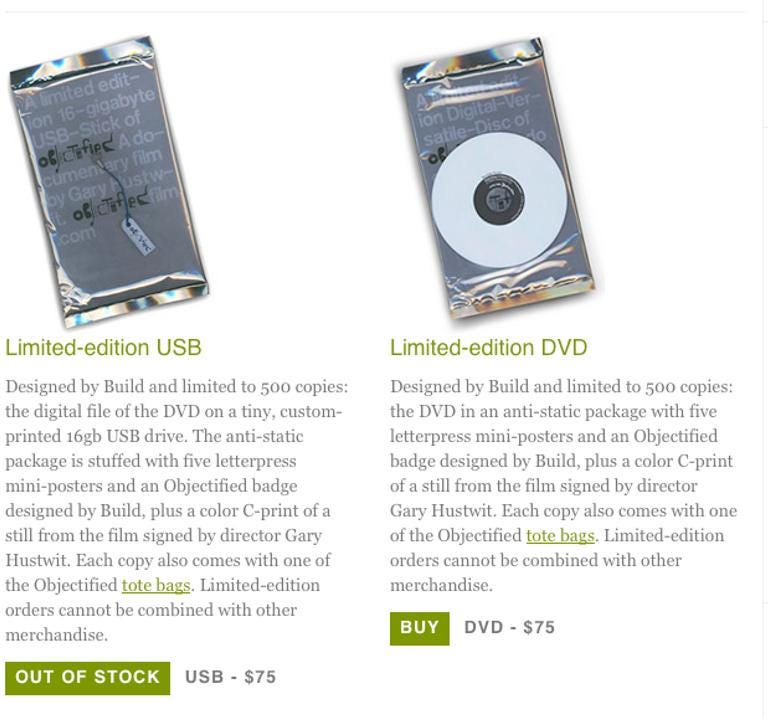
- Gary Hustwit is a master of merchandise and I’ve been a fan of the products he has created since Helvetica and Objectified (where he sold the film as a hard drive in a signed and numbered sealed package!). For Eno, he has crafted a range of limited-edition prints and artwork, many of which have sold out.
- Hundreds of Beavers turned its indie cult status into a full-fledged merch ecosystem, offering buttons, fan art, and playful product drops. These items kept the conversation alive between screenings and helped maintain the film’s buzz.
Final Thoughts
Releasing your film doesn’t have to be a one-lane road to a streamer. When you build your plan using these four interconnected paths, you turn your film into a multi-platform experience with multiple ways of connecting with audiences – no matter what your distribution goal is.
- 🎟️ Event = Community and buzz
- 📱 Digital = Convenience and scale
- 🎓 Educational = Longevity and social impact
- 🧢 Merch = Identity and fan activation
Each category offers a unique lens on how your film can live in the world — and when woven together, they unlock sustainability, flexibility, and growth.https://jonreiss.substack.com/p/rethinking-rights-the-new-playbook